
A THOUSAND TIMES: THE ART AND MUSIC OF MARTIN SHAMOONPOUR
Binghamton has its way of luring the most precious gems into its roughest caverns. One open mic night at Callahan’s, not long ago, among the pluckers and crooners appeared Martin Shamoonpour, who played the jaw harp with such lucidity that it sounded almost alien. “I’m not good at driving; I’m not good at using guns. I’m not a good singer. I cannot whistle,” says the Iranian native. Despite this short list, he has made a home for himself in the United States, with a resume that includes composing for theatre, acting in films, and creating compelling visual art. He spoke with us about dreams, artistic authenticity, and his beloved Binghamton:
TRIPLE CITIES CAROUSEL: Can you recall your first contact with creativity?
MARTIN SHAMOONPOUR: I started drawing and painting when I was very, very young. I lost a lot of [my artwork] because when you immigrate, you try to be very compact. You know, moving, you lose some things that maybe were very important.
I started music later, like, 15, 16 years old with drums – frame drum, [which is also called] daf – so I was playing traditional music in Iran, and then I started flute. I’m not good at being a student. I didn’t like school, so I never had the good teacher; I just started as self-taught. I just had two or three sessions on drums, so I never had somebody to teach me flute; I just learned it by myself and [from the] internet.
TCC: So, when you first started painting when you were a kid, did you have somebody teaching you? How did you end up painting?
MS: Like every child. My parents said ‘you know, that is very beautiful,’ and they started collecting them and putting dates: Martin, four years old; five years old. I’m a huge fan of mathematics, so that’s what I started learning in my school. I wanted to be, like, a physicist or something like that, but I went to University of Tehran for graphic design.
TCC: When did you come to the United States?
MS: Two years ago: 15 October, yeah, two years ago.
TCC: And you came to Binghamton from Tehran?
MS: Yes, I came to New York, and then took a car and came to Binghamton.
TCC: Why did you leave Iran?
MS: I didn’t want to – I really didn’t want to. But I missed my family, because my mother, sister, brother - they came to the United States seven years ago. They wanted to start a new life here. So me and my father, we came here. [My family] stopped in California, Burbank, and they moved here because my brother is getting his PhD at BU.
I had no idea what is Binghamton. I was thinking it should be like New York City - I don’t know. I have no friends here, so I stayed a couple of weeks here and then moved to Brooklyn. I have a thousand friends there, and some of them are my friends for more than ten years. But they were different.
They were different because New York City is crazy. It changes people. Maybe because it’s expensive – everybody’s running, you know; everybody’s busy. I didn’t like it. I stayed until June and it got very hot. I came back to Binghamton and I want to stay in Binghamton. I’m working… as a selector, freezer. So I have a job, pay bills. Besides that, play music. I think I’ve played music with most of Binghamton musicians in any genre: folk, Irish, country music, Americana, experimental music – everything.
TCC: Can you describe the way that the creative climate shifted in Iran during your lifetime?
MS: I don’t really like it, you know. It’s very close [to how it is in the] United States. I was never a fan of pop art. Like, if you’re a pop artist, you can make money in Iran. If you’re a pop artist you can make money in the United States. If you’re an avant-garde artist – very experimental musician – it’s hard in Iran, and also in the United States.
I met a lot of experimental musicians in New York City; they’re very rich, and also in [Tehran]. It’s very, very similar. Tehran is very close to New York City. There are three types of musicians, for example: the first type, they just do music and make money by music. It’s hard. The second one is, they have two jobs: music and another thing. The third type is they are rich: they do nothing and they do anything they want in music, and they don’t accept money from music, and they are famous because their music is pure; they’re not doing it for money. I think New York City is the same.
TCC: When you were in Tehran, you were working as a composer?
MS: Theatre composer, yes. It’s hard to say ‘composer,’ because it’s not like composing for an orchestra. In Iranian theatre, it’s a smaller business. You can’t compare it to Broadway or something. It’s like Off-Off-Broadway.
TCC: Were you able to make a living that way?
MS: No. It’s hard. It’s very hard. You can live with that, but you should do about, you know, ten projects per month, and your quality, of course, goes down. So what did I do? I was teaching flute, I was teaching daf, and I was doing some theatre projects, and some concerts, records. I am a multi-instrumentalist: I play Jew harp; I play flute; I play frame drum. For example, if traditional music or a band, they need a daf player, so I was playing with them, as a record, as a concert. It was hard. I wasn’t making good money, but you could live with that.
TCC: Do you think you could keep working as a musician in the United States?
MS: It takes time. I was good when I started in Iran, but it takes time because people, they should know you. When I started in New York City, it was very hard because it’s very competitive. People… sometimes they do not help you, or they want you: ‘okay, you can play with us, but there’s no money – I’m sorry.’ Or: ‘It’s good for you; they will know you.’ So, maybe they’re right; maybe you can make money. Maybe, but it takes time. You should have [a] name. They should know you.
TCC: How do the audiences here in Binghamton compare to the audiences-
MS: I love Binghamton. Binghamton is great because audiences, you know, they accept new music and it’s very, very good. I had some experiences in Berlin, and in Austria – Vienna – they were shocked, but they are big cities. It’s Vienna. It’s Berlin. Binghamton has very good musicians, and they accept your music, and they ask me to do music with them. It’s very beautiful.
I didn’t feel this way in Brooklyn, because musicians, they want to be alone. They want to perform for audiences. I opened for some concerts; I didn’t feel good about that - New York City. There’s something wrong with that city. Something’s wrong over there; I don’t know what’s that.
TCC: What about compared to the audiences in Tehran?
MS: There’s a proverb that they say in Farsi, that every place in the world, the sky is one color. It means that everybody’s… you know, it’s the same. The difference is that I’m speaking English. Over there, I’m speaking Farsi. But it’s very, very same. Sometimes, you see some audience, they talk sarcastically: the same, like Tehran. Sometimes, they talk directly and say “I don’t like you” - exactly like Tehran. Sometimes they say, “I love you with all my heart.” It’s really the same.
Let me think about the difference… Maybe, there’s a difference – it’s not because of a difference between United States and Tehran – it’s a difference because Binghamton is a very small city, compared to Tehran. For example, when I was doing open mics in New York City and Brooklyn, it was exactly like Tehran. They were not talking so much; they tried to hide what they feel. It’s very good, because in Binghamton, people are humble; they say, ‘Oh my god, it was great.’ ‘Thank you, thank you so much.’ You know? So I feel a thousand times better here.
But. The problem that I have in Binghamton is that when I was in New York City I had friends that I had for more than ten years. I miss them, but I cannot make it over there, because it’s pretty expensive. Sometimes I think of living over there. I miss that friendship, that sometimes you just speak Farsi… I’m sorry, my English really sucks.
TCC: No it doesn’t.
MS: I’m a funny guy, but no, I’m not when I speak English, because it’s hard to make jokes with English, you know.
TCC: You actually are good at making jokes in English. You are incredibly lucid onstage. Whether you’re playing the mouth harp and beat-boxing or making jokes, how do you enter that mindset?
MS: Another beautiful one in Farsi that says, if you want to do the thing best, you should [do it] more than a thousand times. It comes from experience. I remember when I was performing… I was, like, 18 years old – it was church; it was Christmas in Tehran, and I came onstage and I was dying, you know, exhausted, and, you know, sweat, and it was very hard, and when I saw that, oh my god – I am not good at it, so I should do it thousand times. And I started doing for friends, and I’m fat, so, if you want to have girlfriends or something like that, you should play music very good, you know? So, you should perform a lot, you know? That’s what I feel.
TCC: So, you’re a composer, a performer, a musician, a visual artist – could you talk about your artistic process?
MS: It’s hard. So, taking shower: when you take shower, you think about – I think about serious things when I take shower, or playing backgammon… sometimes suddenly something comes in my mind. I don’t have a paper, so I just write a text message and take a screen shot: I should do next album about this thing; I should paint this thing. I’m a huge fan of comedy, so I watch a lot of sitcoms. Sometimes they are disgusting; they are not funny at all. But some of them, they are. So, some ideas come from comics and sitcoms, and… I am a huge fan of Belgian and European comics like Asterix and Obelix and Tintin – I grew up with Tintin. I grew up with two things: Lego and Tintin. If I marry a girl and if I turn father, I should buy thousands of Legos and Tintin. Also, I’m a huge fan of cartoon and animation. Stop-motion. I hate 3D’s. Japanese animations, like mangas: they’re great. Animation is everything.
TCC: So, you draw your inspiration from things like that?
MS: I do something else: I write or record my dreams, or nightmares. The most beautiful dream that I had in my childhood, I’ll remember until the last day of my life, and it was brilliant. Actually, it was starting with nightmare: it was a desert; I was running – three wolves, they were chasing me. It was scary. And I said, “Stop! It’s a dream. They are not real.” And I remember they went to the air; it was so funny. It was the most beautiful dream that I had. And I learned that everything is in your mind: if you have a problem, if you have something unpleasant in your life, you can make it good in a second.
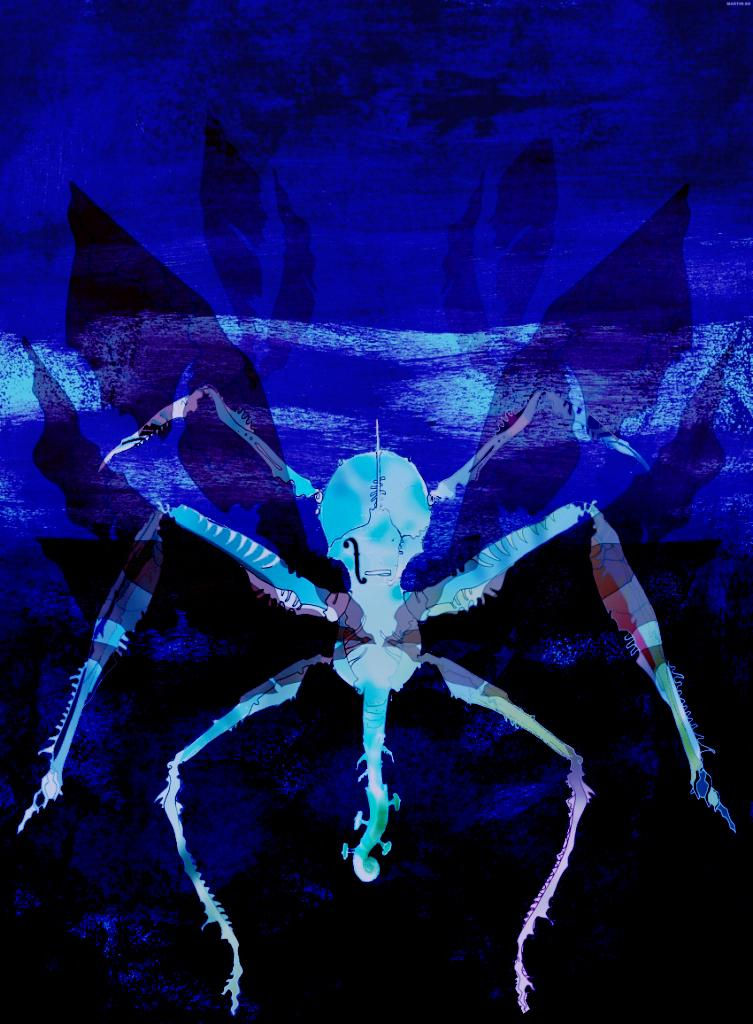
TCC: Can you talk about the art that you are creating for the cover of this issue?
MS: Enjoy today; tomorrow is worse. I cannot talk about that. It came to my mind, and I could draw that. I stop thinking when I draw, because when it’s blank, when it’s white, I see it. And I just put the pen there, I see, and I draw. I think that tomorrow is worse. Today was Monday, but tomorrow is really worse. People who read this conversation, they should know that tomorrow is worse.
TCC: Why?
MS: I don’t know.
TCC: Do you think that some people would say that that’s a bad attitude to have?
MS: It’s not a bad attitude; actually, it’s a great attitude, because you should save the time. It’s wrong if you say tomorrow is better. Shit, if you say tomorrow is better: okay, I’m going to sleep, tomorrow is better. No, it’s not. It’s a great attitude to say tomorrow is worse. But it’s really worse.
TCC: So, coming to America at this point in history, what do you think is your role as an artist?
MS: I don’t know. What should I do now in United States? I want to play with Lady Gaga. I don’t know how can I do that, but I want to do that. I want to play with her, I don’t know why. I love Tom Waits and Lady Gaga, but Tom Waits is old… so maybe Lady Gaga?
TCC: What do you think is the role of the artist in general?
MS: I really don’t like this question; it’s like: what shall I do as an artist? Shall I portray people? Shall I portray in paint? I don’t. I play music; remember: the first and the most important audience is yourself. I can lie to you; you cannot lie to yourself. I cannot lie to myself. I don’t have a duty at all. I can stop playing right now. I can stop painting right now. When you say that what is my role… there is general role: I never do music just for money; that’s why I’m working in a freezer.
It’s wrong, it’s completely wrong if your goal is money from painting and music. You know thousands of examples: you see some pop artist, see that their music is fake. If you do music for money, you should do fake things; you should lie, you should play something that you really do not want. So, I wish I was rich and could do experimental music, but I am not. So I do two things: one for a living, and another one for just what I want. So, my role as an artist is: I should not lie; I should do anything I want.
Martin does not have a website, nor is he showing his art anytime soon. But he can be found all over town playing any number of instruments with a variety of local musicians.


Comments